Example · synthetic case · produced 12–13 Oct 2026
See what you actually get
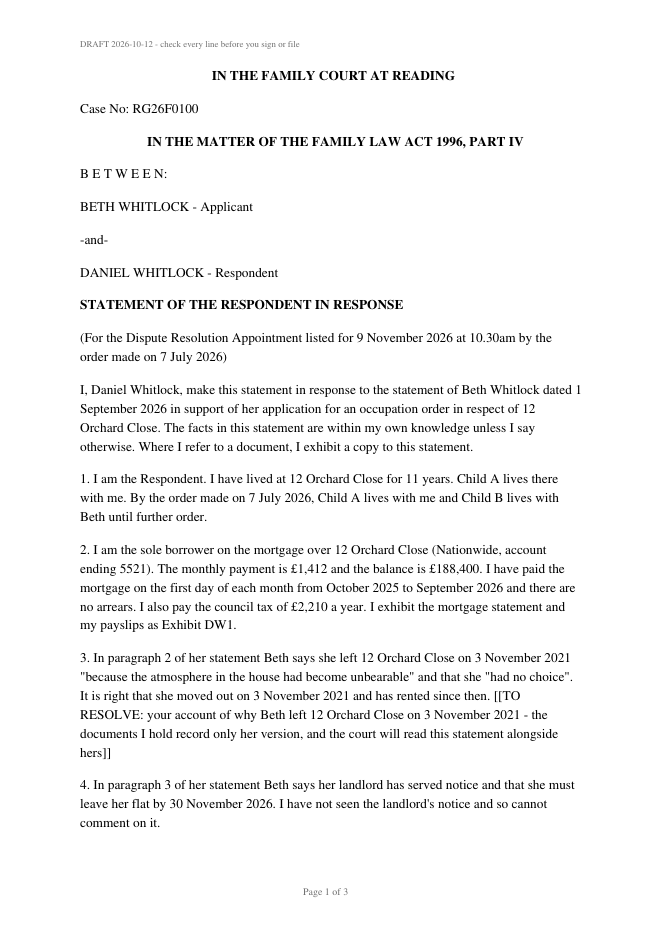
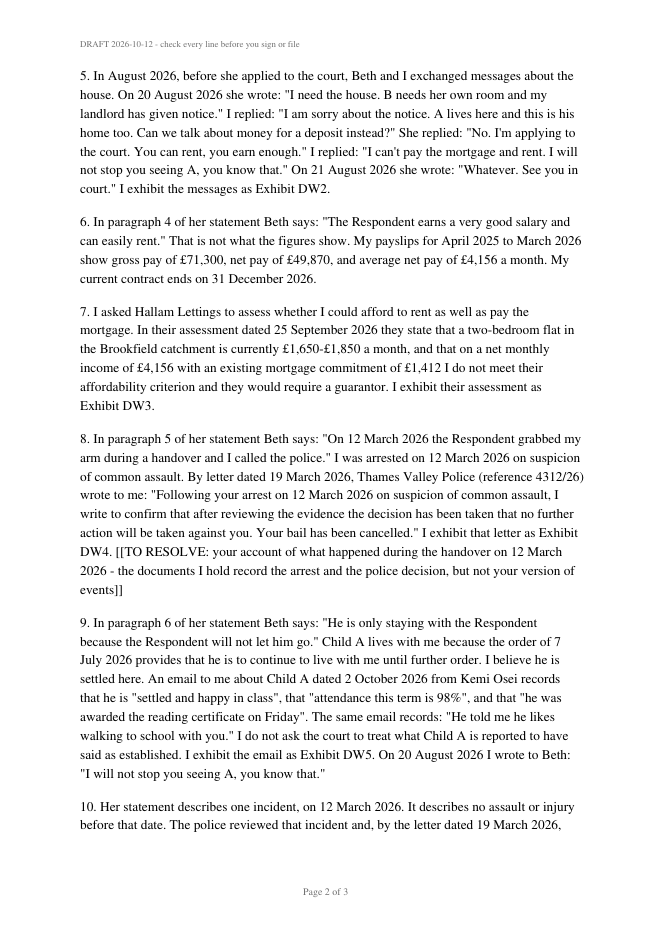
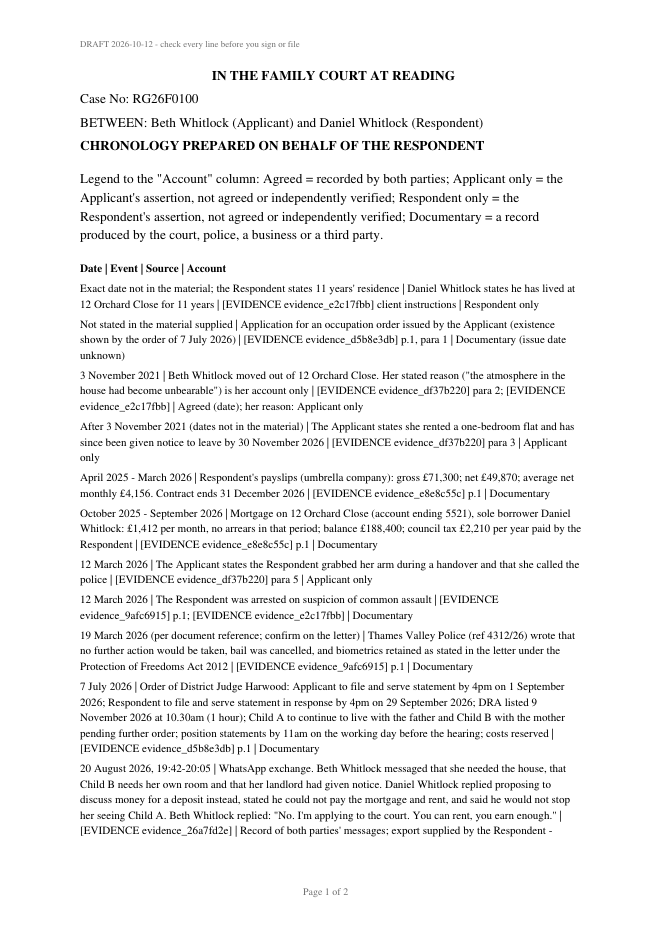
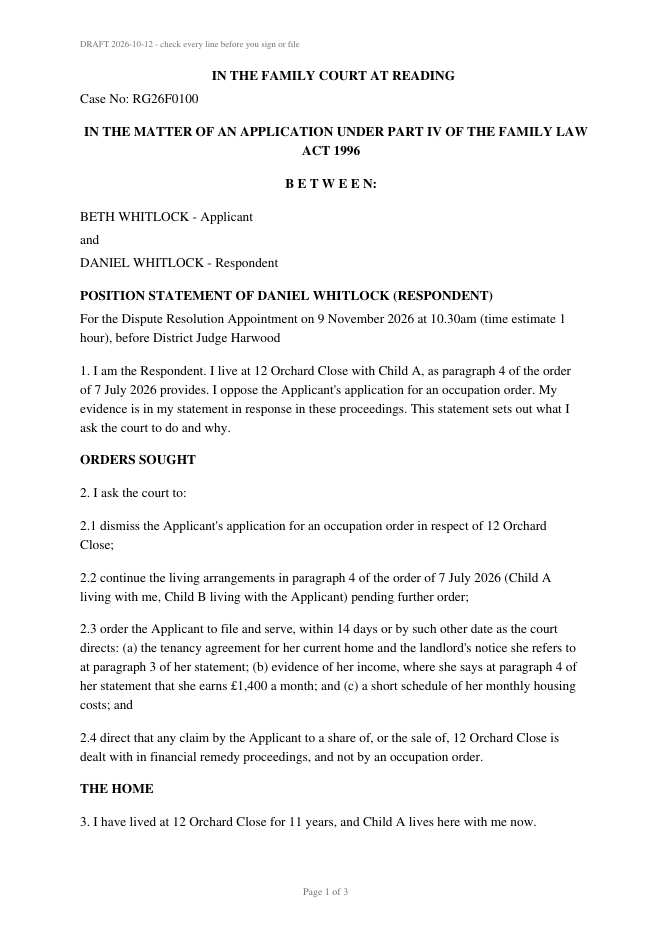
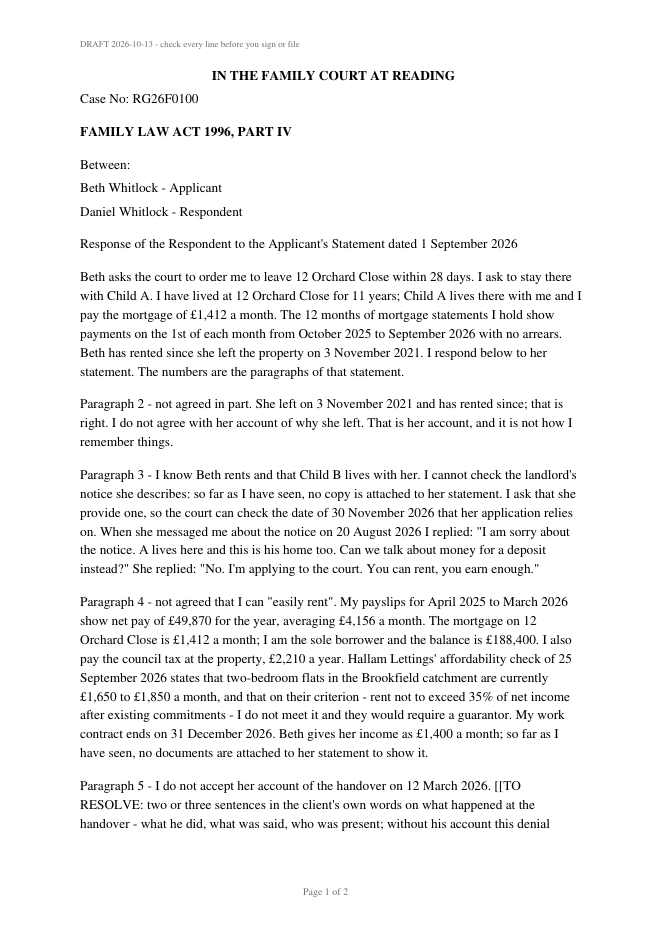
These are the real outputs from our end-to-end test on the live service. The case is synthetic: Daniel Whitlock answers his former partner's occupation-order application in the Family Court at Reading. The people, addresses and figures are invented. Nine ordinary documents went in: a sealed order, a police letter, payslips, her statement, a school email, a letting agent's check and a WhatsApp export.
Nothing below was edited by a person. Each draft was written, checked by an automatic red-team review, corrected, and released to the user to check.
Statement in response, page 1. First-person, numbered paragraphs, drafted from the uploaded papers. Where only the user can give their own account, the draft marks the gap for them to fill in. Check every line before you rely on it.Statement in response, page 2. Exhibits DW1 to DW5 and the statement of truth, ready to check, sign and date.Chronology. Date, event, source document, and whose account each entry is: agreed, one side only, or documentary.Position statement for the hearing. The orders asked for, the home, the child, and the incident relied on, aimed at the PD27A limit of three pages; check the page count before filing.After the red-team check. A status block says what the review found and fixed, and lists what is still to resolve before filing.
What it won't do
Where only you can say what happened, the draft marks it for you to fill in, but drafts can still be wrong, so check every line.
It won't file, serve or send anything. You check, sign and file every document yourself.
It isn't legal advice, and it is not a law firm.
The full test, with every screen and the defects we found and fixed, is on the test results page.